
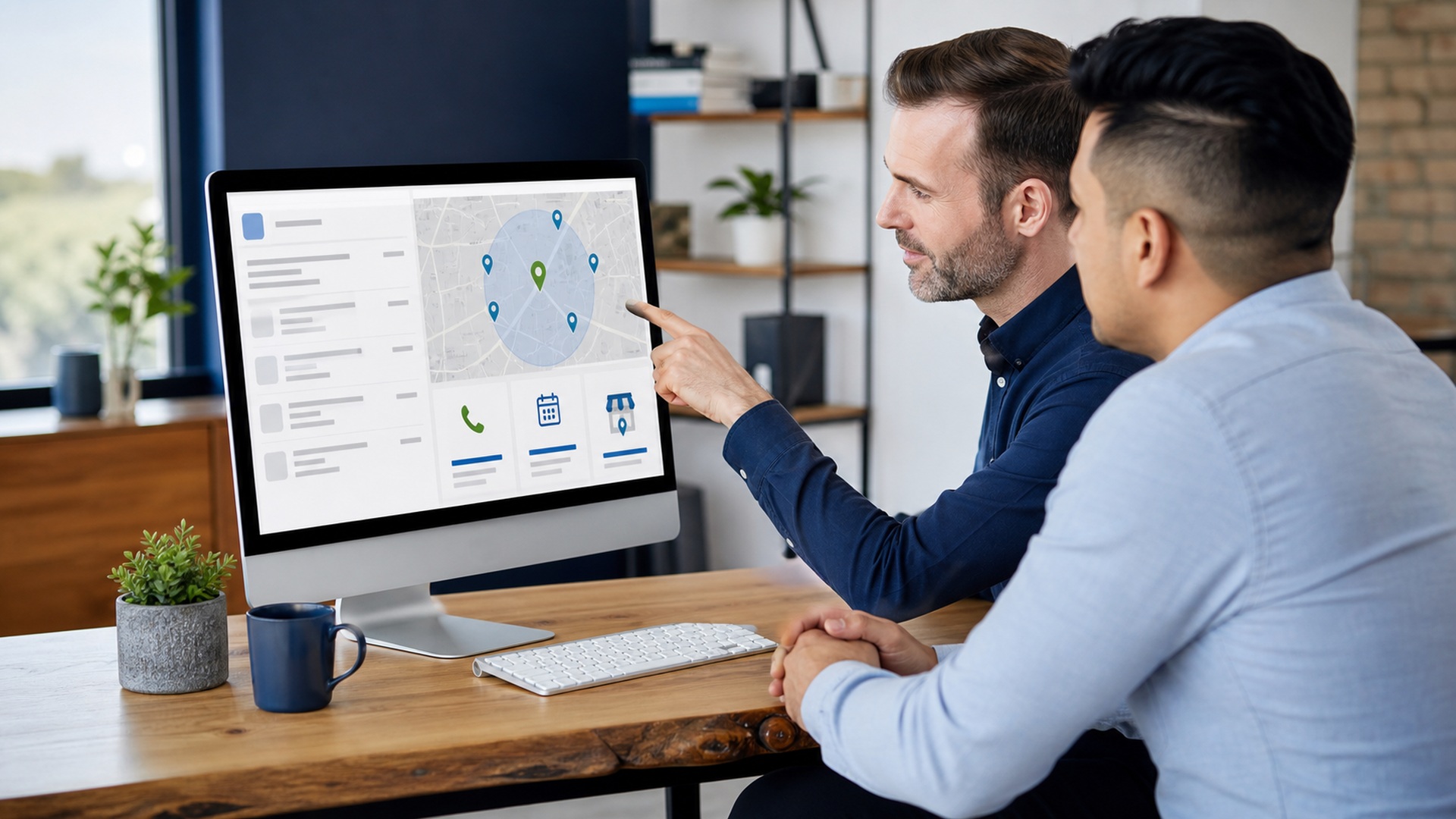
Local landing pages can help customers understand whether a business serves their area and what the local experience looks like. They become risky when many near-duplicate pages exist only to capture search traffic and funnel every visitor to the same destination.
What Google considers doorway abuse
Google’s spam policies describe doorway abuse as pages created to rank for similar queries that lead users to intermediate or substantially similar destinations. The issue is not the presence of a location name; it is the lack of distinct value and the manipulative system around it.
When a local landing page is justified
Create a page when the business genuinely serves the area and can provide useful, location-specific information. Examples include different service availability, travel expectations, regulations, local projects, team coverage, pricing factors or customer questions.
Give each page a distinct purpose
Define the audience, service and action before writing. A city page should not be a copied service page with place names swapped. If there is no meaningful local difference, a strong regional page may be better than many thin pages.
Include verifiable local evidence
Use real project examples, original photos, service-area details, relevant testimonials and local process information. Do not invent offices, clients, addresses or results. Link to proof that a visitor can evaluate.
Write a useful page structure
A strong page may include a direct answer, service scope, who it is for, local considerations, process, examples, FAQs and a clear contact path. Use headings that help scanning and keep the primary action consistent with the offer.
Connect pages through normal navigation
Important location pages should be reachable from service-area or location hubs, relevant services and contextual links. Avoid hidden lists of keyword pages or orphan pages created only for search engines.
Keep business information accurate
Match contact details, opening hours and service areas with verified business information. Do not display a local address unless the business is eligible and serves customers there. Our Local SEO service aligns landing pages with the broader local presence.
Avoid duplicate metadata and boilerplate
Write a unique title, description, heading and opening answer based on the page’s real purpose. Shared brand and process components are normal, but the substantive local content should be distinct.
Measure quality after publication
Track qualified enquiries, engagement, search queries and whether visitors find the right location information. Consolidate pages that remain thin or overlap after a reasonable evaluation period. Preserve useful URLs and redirect retired pages directly when consolidation is needed.
A pre-publication checklist
Confirm genuine service coverage, unique local value, verifiable evidence, accurate business details, crawlable navigation, one clear H1, self-canonical metadata, mobile usability, working actions and no misleading location claims.
Frequently asked questions
How many location pages should a business create?
Only as many as it can support with genuine, useful and distinct local information.
Can nearby cities share some content?
Yes, but each page still needs a distinct reason to exist and substantive local value.
Should every city page be in the main menu?
Not necessarily, but important pages should be reachable through a logical location or service hierarchy.
Plan Local Pages Around Real Customer Value
Power Web Solutions can audit your location structure and create a scalable content plan that supports users without thin or doorway-style pages.