
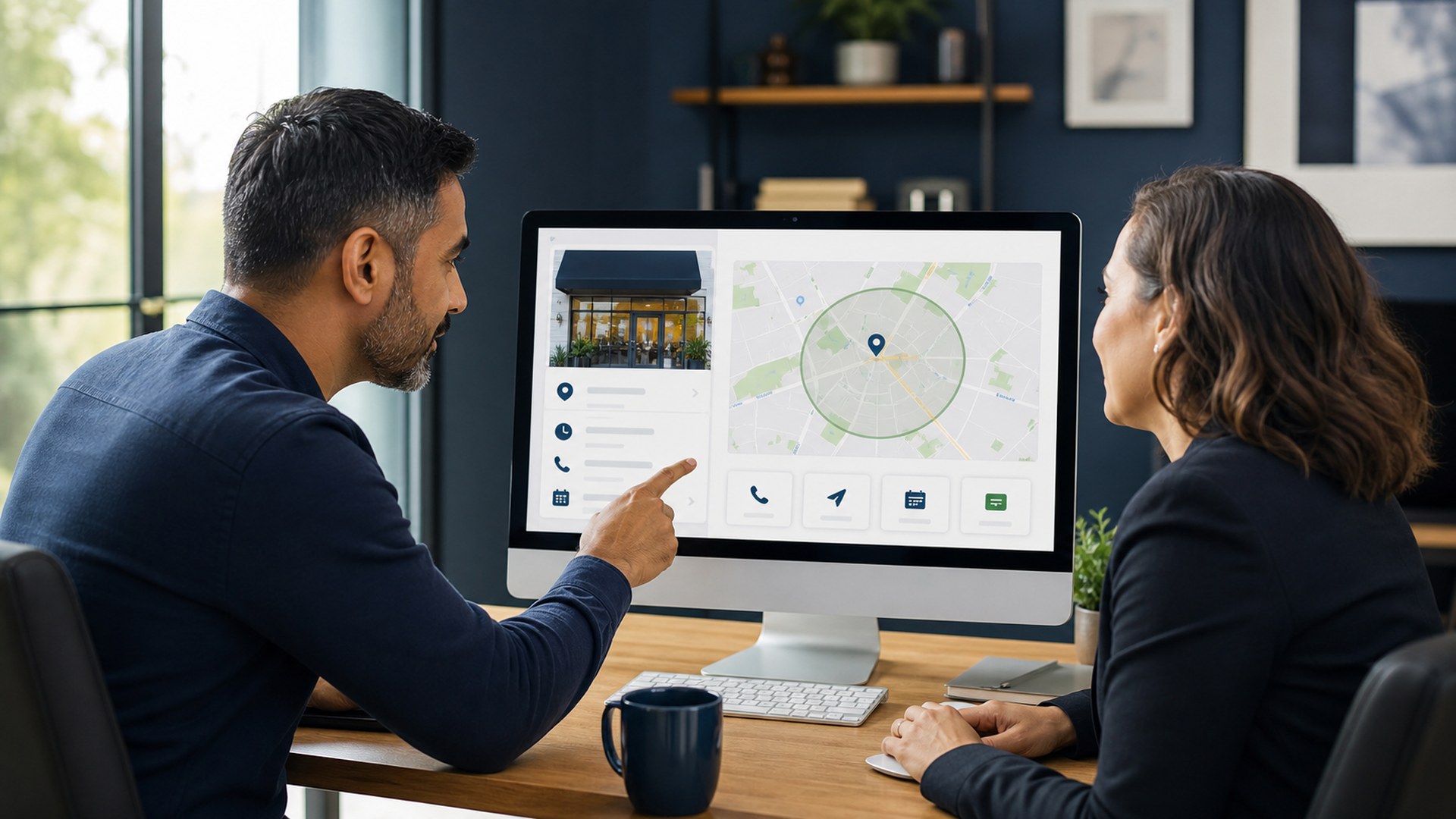
Make Your Business Profile Accurate, Useful and Ready for Local Customers.
Improve profile accuracy, policy alignment and customer actions with a practical optimization plan for eligible local businesses.
Google Business Profile optimization improves the accuracy, completeness, relevance and customer experience of an eligible business listing on Google Search and Maps. It reviews profile access, categories, contact details, service areas, services, photos, links and measurement while following Google’s policies. The product was formerly called Google My Business.
Who Is Eligible for a Google Business Profile?
A business must meet Google’s eligibility requirements before optimization makes sense. In general, the business needs real, direct contact with customers during stated hours. Online-only businesses and lead-generation entities without eligible customer contact should not create a profile simply to gain map visibility.
Eligibility depends on the real operating model, not the visibility a business wants. A rented mailing address or virtual office is not a shortcut. It can be used only when the location genuinely meets Google’s requirements, including customer access, staffing and permanent business representation where applicable.
Common Business Profile Problems
A profile can look complete at a glance while still creating uncertainty for customers or Google. We identify the specific issues that affect accuracy, policy risk, relevance and the path from discovery to contact.
What Our Google Business Profile Optimization Service Includes
The exact scope follows the audit, eligibility review and the access the business can safely provide. A responsible engagement may include:
- Ownership and access review: confirming appropriate owner and manager roles before changes are proposed.
- Eligibility and policy audit: matching the operating model with current Google requirements.
- Duplicate-profile review: identifying possible duplicates and documenting the safest next step.
- Real-world business-name validation: aligning the profile name with consistent signage, branding and customer recognition.
- Primary and secondary category review: selecting specific categories that represent the core business without treating categories as keywords.
- Address and service-area review: checking visibility, accuracy and the correct setup for storefront, service-area or hybrid operations.
- Contact and hours review: confirming phone, website, regular hours and special hours.
- Services, products and attributes: improving useful details only where they genuinely apply.
- Policy-compliant description: explaining the business clearly without links, fabricated claims or promotional clutter.
Website, Media and Measurement
- Customer-action links: aligning appointment, booking and website destinations with the right landing experience.
- Photo and video guidance: planning authentic, useful media that helps customers understand the business.
- Posts and Q&A guidance: recommending practical use where these features are available and appropriate.
- Ethical review-process guidance: supporting consistent requests for genuine feedback without review gating, payment or incentives.
- Landing-page and NAP alignment: reconciling profile details with accurate website content and important citations.
- UTM and conversion tracking: recommending measurement for website visits, calls, bookings and other agreed actions.
- Baseline and reporting plan: documenting the starting point and the metrics that can support useful decisions.
What We Inspect in a Google Business Profile Audit
| Profile area | What we inspect | Why it matters |
|---|---|---|
| Eligibility and access | Operating model, customer contact, ownership and manager access | Creates a safe foundation for responsible profile work. |
| Business identity | Real-world name, address, phone, website and consistency | Reduces confusion and supports accurate representation. |
| Categories and services | Primary category, relevant secondary categories, services and attributes | Helps describe the business specifically without keyword stuffing. |
| Location settings | Displayed address, hidden address, service areas and hybrid setup | Aligns the profile with how customers genuinely receive service. |
| Customer experience | Hours, special hours, description, photos, booking paths and useful details | Helps customers evaluate the business and take the next step. |
| Measurement | Website and appointment links, UTM structure, calls and conversion events | Connects profile activity with meaningful business actions. |
Google’s <a guidelines for representing a business emphasize accurate real-world names, precise addresses or service areas, focused categories and one profile per business location in ordinary circumstances. We use that guidance as the policy baseline, not tactics designed to manipulate the platform.
Storefront, Service-Area and Hybrid Profiles
| Business model | Customer interaction | Profile consideration |
|---|---|---|
| Storefront | Customers visit a staffed public location during stated hours. | Show an accurate address when the location meets Google’s requirements and represents the business clearly. |
| Service-area | The business travels to customers and does not serve them at its address. | Hide the address from customers and define genuine service areas. A home address should not be displayed when customers are not served there. |
| Hybrid | Customers visit the staffed location and the business also travels to them. | Use an accurate address and realistic service areas when both parts of the operating model qualify. |
Our Eight-Step Optimization Process
- Discovery and access. We clarify the operating model, customer journey, ownership and authorized approvers.
- Eligibility and policy review. We compare the business with current rules for storefronts, service areas, practitioners and addresses.
- Duplicate and identity audit. We review possible duplicates and reconcile the real-world name, phone, website and location.
- Category and service mapping. We identify a specific primary category, justified secondary categories and accurate services.
- Profile-detail optimization. We prepare approved updates for hours, attributes, description, services, photos and customer links.
- Website alignment. We compare the profile with landing pages, NAP details and the on-site service experience.
- Measurement setup. We recommend UTM conventions, conversion measurement and a practical baseline.
- Quality check and handoff. We document completed work, owner actions, policy considerations and responsible next steps.
Some fields and features vary by category, country and profile state. We document approvals and avoid unsupported changes.
Deliverables and Clear Exclusions
Deliverables may include a policy checklist, ownership notes, duplicate review, category recommendations, corrected business-information plan, compliant description, media guidance, website-alignment notes, tracking specification and prioritized handoff report.
The service excludes fake or incentivized reviews, review gating, keyword-stuffed names, invented offices, unnecessary profiles and fabricated results. It cannot guarantee verification, reinstatement, ranking or lead volume. Complex cases may require direct business action and Google review.
Businesses that need an ongoing process for genuine review requests and professional responses can use our Google Review & Reputation Management service.
Industries and Local Business Types We Serve
The process suits eligible clinics, dentists, doctors, physical therapy practices, plumbers, electricians, HVAC companies and other local service businesses that depend on calls, appointments, directions or quotes. Recommendations follow the real customer journey and operating model.
How Profile Optimization Complements Local SEO and Google Ads
Profile optimization owns profile accuracy, policy compliance and customer usefulness. Broader Local SEO services connect it with website structure, content, citations and organic strategy.
Paid search serves a different intent. Businesses building campaigns can review Google Ads Management, while existing accounts can explore Google Ads Optimization. Both need a consistent landing experience, which our Website Design and Local Website Conversion Optimization services can support.
Why Power Web Solutions?
We verify the operating model, use official guidance and document each recommendation. We do not add keywords to a real-world name, invent locations or assume a feature is available. The business retains ownership and final approval.
What Optimization Can and Cannot Influence
Google says local results are mainly shaped by relevance, distance and prominence. Accurate information can improve understanding and customer experience, but distance cannot be manipulated through normal optimization. Competition, user location and Google’s systems remain outside agency control. See Google’s
No agency can guarantee ranking, verification, reinstatement or lead volume. The goal is an accurate profile that helps eligible customers call, visit, book or learn more.
Google Business Profile Optimization FAQs
What is Google Business Profile optimization?
Google Business Profile optimization is the process of improving an eligible profile’s accuracy, completeness, relevance and customer experience. It can include access, categories, contact details, service areas, services, description, photos, links and measurement while following Google’s current policies.
Who is eligible for a Google Business Profile?
Businesses that have face-to-face contact with customers during stated hours may be eligible, including qualifying storefront, service-area and hybrid businesses. Public-facing practitioners can also qualify in defined circumstances. Online-only businesses and unsupported lead-generation entities are generally not eligible.
Can optimization guarantee a higher Google Maps ranking?
No. Google considers factors including relevance, distance and prominence, and results vary by user and context. Optimization can improve accurate representation and customer usefulness, but no agency controls rankings or can manipulate distance.
What is the difference between a storefront, service-area and hybrid business?
A storefront receives customers at a staffed public location. A service-area business travels to customers and does not serve them at its address. A hybrid business does both. The correct profile setup should match the real operating model.
Should a service-area business display its home address?
Not when customers are not served there. An eligible service-area business operating from a residential address should generally hide that address and define genuine service areas according to Google’s guidance.
More Google Business Profile Questions
How should Business Profile categories be selected?
Choose the most specific primary category that describes what the business is, then add only relevant secondary categories. Categories should not be used as keywords or added merely because the business offers a related service.
Does the service include review guidance?
Yes, the agreed scope can include an ethical process for requesting and responding to genuine feedback. It does not include paid reviews, incentives, review gating or fabricated feedback. Full review management is a separate service area.
How does Business Profile optimization support Local SEO?
The profile provides accurate business, service and customer-action information, while Local SEO connects that entity with website content, technical quality, citations and broader organic strategy. They support one customer journey but have different scopes.
Can duplicate or suspended profiles be fixed?
We can audit possible duplicates, document evidence and recommend policy-aligned next steps. Some cases require action by the business and review by Google. We do not guarantee a merge, verification or suspension reinstatement.
What is included in a Google Business Profile audit?
An audit can review eligibility, ownership, duplicates, the real-world name, categories, address or service areas, phone, website, hours, services, attributes, description, media, customer links, website alignment, policy risks and conversion tracking.
Special Offer Packages
Policy-safe profile optimization at a practical one-time price. Google controls verification and local rankings; no ranking, verification, reinstatement, or lead-volume guarantee is implied.
ENTRY OFFER
FOUNDATION FIX
Included Service Value $550
SPECIAL OFFER
$250 one-time
SAVE $300
Best for: One eligible storefront, service-area, or hybrid location that needs accurate core profile information and a prioritized correction plan.
- Best for: One eligible storefront, service-area, or hybrid location that needs accurate core profile information and a prioritized correction plan.
- Coverage: 1 eligible location
WHAT’S INCLUDED
- Ownership + manager-access review
- Eligibility + Google policy checklist
- Name, phone, website, hours + special-hours review
- Primary/secondary category recommendations
- Address visibility / service-area configuration review
- Services, attributes + description improvement plan
- Duplicate-profile risk + website/profile consistency check
- Prioritized handoff report + review call
- Contact or booking journey setup
- Accessibility and cross-browser review
BONUS / VALUE STACK
Eligibility Checklist • Core Profile Correction Map • Customer-Action Link Review • 30-Day Priority Roadmap
MOST POPULAR
PROFILE GROWTH POWER
Included Service Value $900
SPECIAL OFFER
$400 one-time
SAVE $500
Best for: Established local businesses that need profile accuracy, website alignment, customer-action mapping, media guidance, and baseline measurement.
- Best for: Established local businesses that need profile accuracy, website alignment, customer-action mapping, media guidance, and baseline measurement.
- Coverage: 1 eligible location + deeper optimization
WHAT’S INCLUDED
- Everything in Foundation Fix
- Deeper duplicate + identity review
- Category, service, attribute + customer-action mapping
- Policy-compliant profile description + service-detail plan
- Website / NAP / landing-page alignment review
- Photo, video, Posts + Q&A guidance where appropriate
- Appointment, booking, website-link + UTM recommendations
- Ethical review-process guidance + baseline measurement plan
- 30-day implementation review + next-actions call
- Contact or booking journey setup
- Accessibility and cross-browser review
BONUS / VALUE STACK
Profile & Policy Audit • Website/Profile Alignment Review • Customer-Action & Measurement Map • 30-Day Optimization Roadmap
BEST VALUE
LOCAL AUTHORITY SYSTEM
Included Service Value $1,300
SPECIAL OFFER
$700 one-time
SAVE $600
Best for: Multi-location, hybrid, practitioner, or complex operating models that need profile governance, consistency, escalation paths, and measurement planning.
- Best for: Multi-location, hybrid, practitioner, or complex operating models that need profile governance, consistency, escalation paths, and measurement planning.
- Coverage: Complex profile system; final location scope confirmed after review
WHAT’S INCLUDED
- Everything in Profile Growth Power
- Multi-location / complex operating-model map
- Location-by-location ownership, eligibility + consistency review
- Governance rules for names, categories, services, hours + links
- Duplicate / suspension-risk documentation + escalation paths
- Website, citation, landing-page + customer-journey alignment plan
- Media, Posts, Q&A + review-response workflow guidance
- Advanced tracking specification + reporting dashboard brief
- Executive handoff + 90-day governance roadmap
- Contact or booking journey setup
- Accessibility and cross-browser review
BONUS / VALUE STACK
Local Authority Operating Model • Multi-Location Consistency Map • Measurement Dashboard Specification • 90-Day Governance Roadmap
NOT SURE WHICH PLAN FITS? Request a Free Google Business Profile Audit
We’ll review eligibility, ownership, profile condition, business model, website alignment, and policy risk before confirming the right scope.
Build a More Accurate Profile and a Clearer Customer Journey.
Start with a focused review of eligibility, ownership, profile details, policy risks, website alignment and measurement. We’ll explain the highest-priority actions and any limits before changes are made. Book a Strategy Call if you would rather discuss the operating model first.